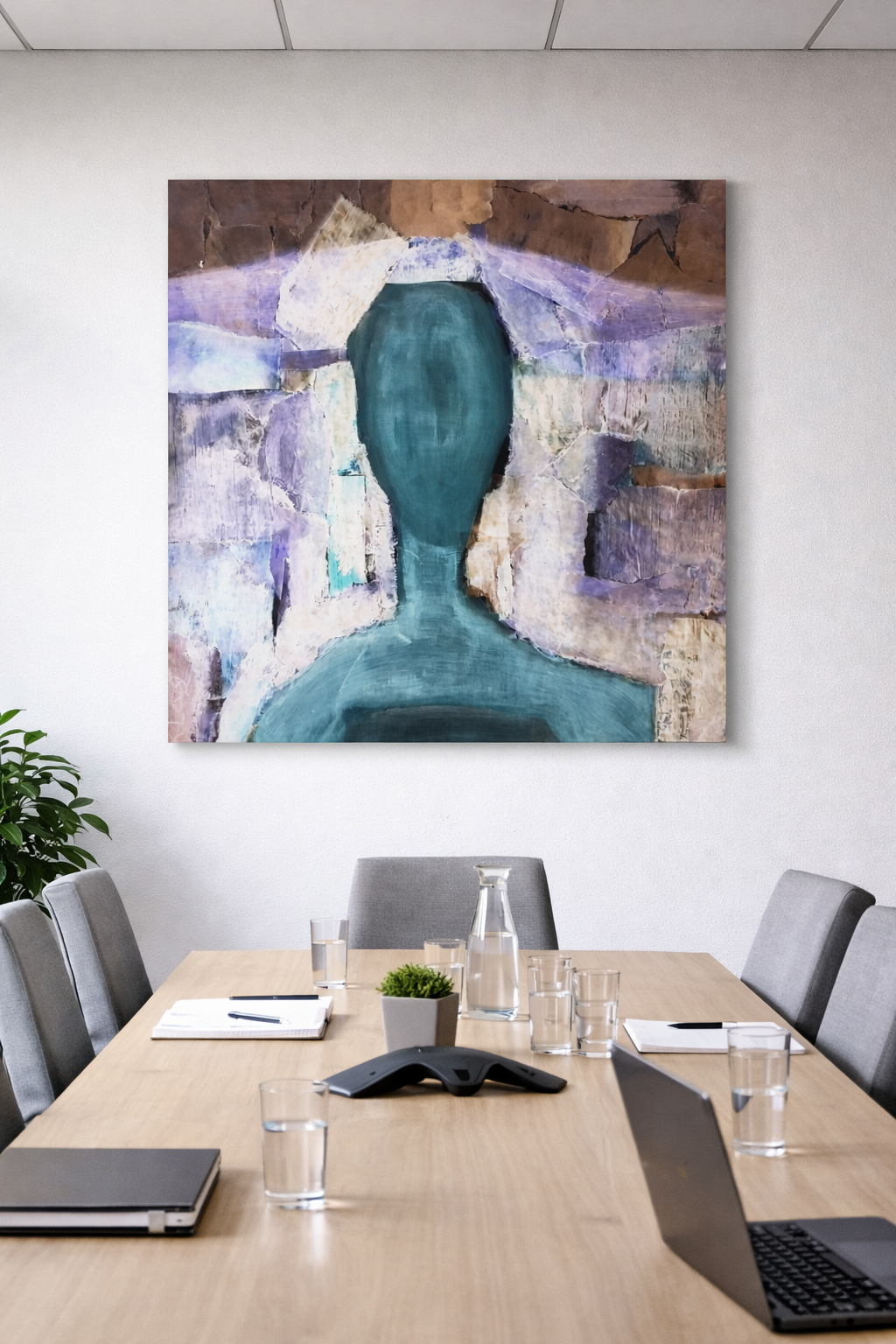
How Office Workers Feel About the Art Around Them
Art in offices is often treated as a finishing touch — something chosen late in a project, installed quietly, and rarely discussed again. It’s expected to sit politely in the background, complement the furniture, and cause no disruption.
Yet when you take the time to speak with the people who actually work in these spaces, a very different picture emerges.
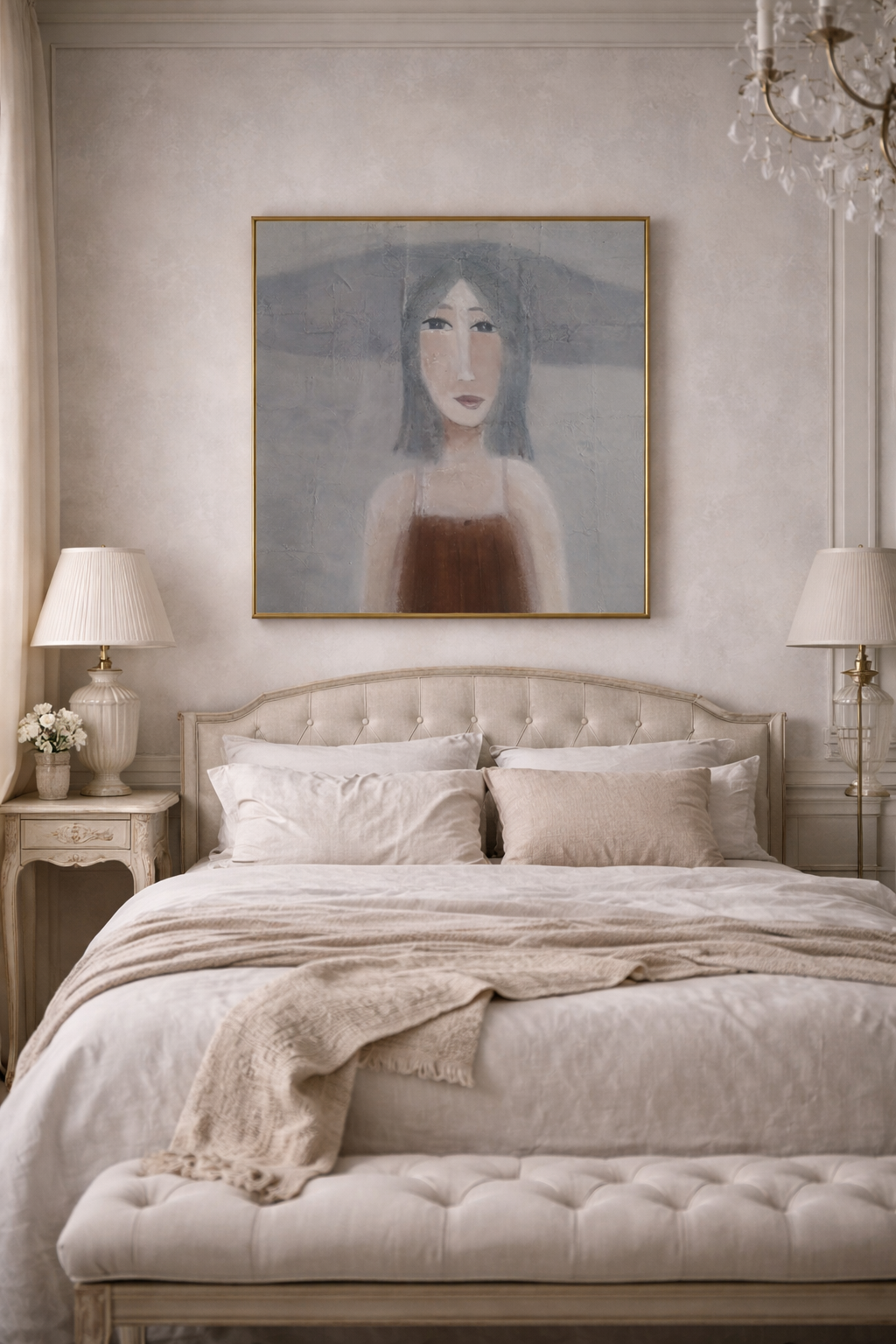
Choosing Art for the Bedroom vs the Office: When Home Is a Sanctuary
Choosing art for an office and choosing art for a home may look similar on the surface, but the intention behind each is fundamentally different.
An office is a public-facing space. Even when thoughtfully designed, it asks art to do something — to energise, to structure attention, to convey confidence or creativity. Art in these settings often works best when it has rhythm, clarity, or a sense of momentum. It can be bold, architectural, or quietly assertive. It needs presence.
Home is different.
A home is where the nervous system finally softens.
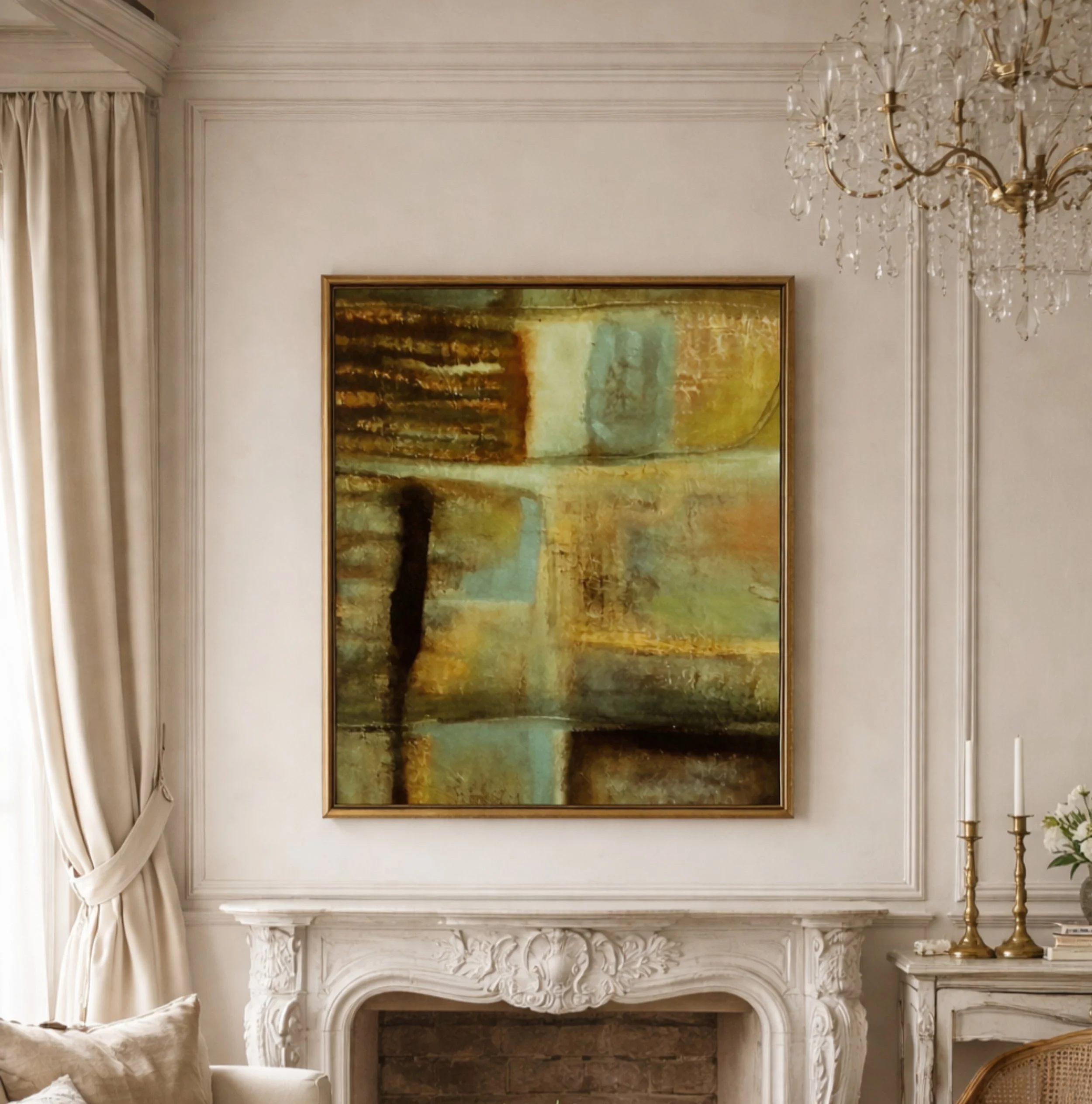
Why Does Texture Matter More Than Image
View artwork “Anchor” on Saatchi Art
Lately, I’ve noticed that the work people pause on isn’t necessarily the most striking or the most explicit. It’s the work with surface — with layers, texture, and a sense of having been built slowly. Before there’s an image to read, there’s something to feel. For me, texture has begun to matter more than image, because it carries presence long before meaning arrives.
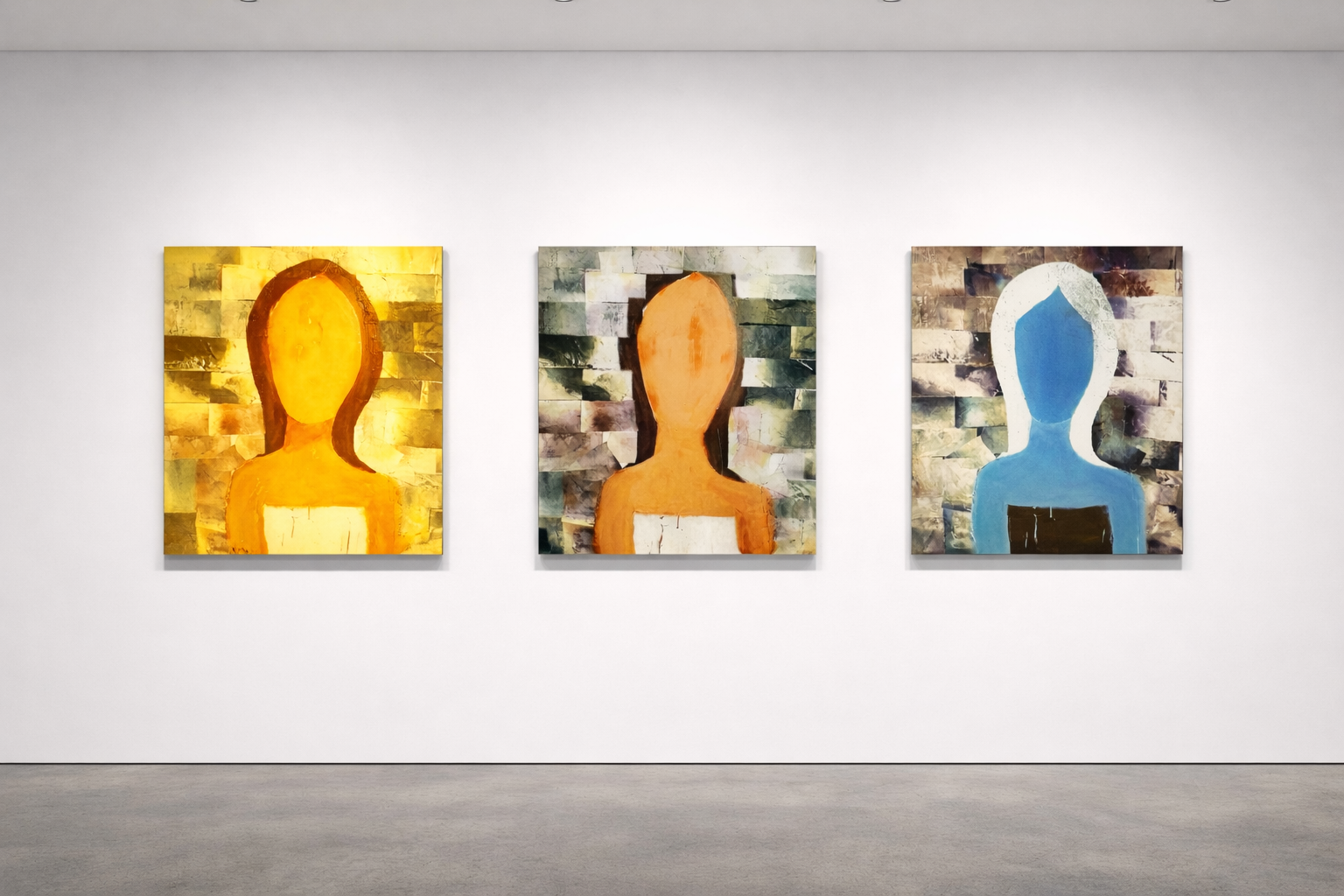
Held Figures
Since writing this, I’ve been struck by how viewers respond to the stillness of these figures — often describing a sense of presence rather than personality. That response has reinforced my interest in figures that are not portraits, but quiet states of being: held, contained, and steady within their surroundings. This ongoing dialogue between the work and its viewers continues to shape how the series evolves.
Held Figures is a series that explores what it means to be contained — emotionally, psychologically, and physically — without being constrained. The figures in these works are simplified, almost archetypal, yet they carry a strong sense of presence. They are not portraits of individuals, but representations of states of being.
Joined Ground
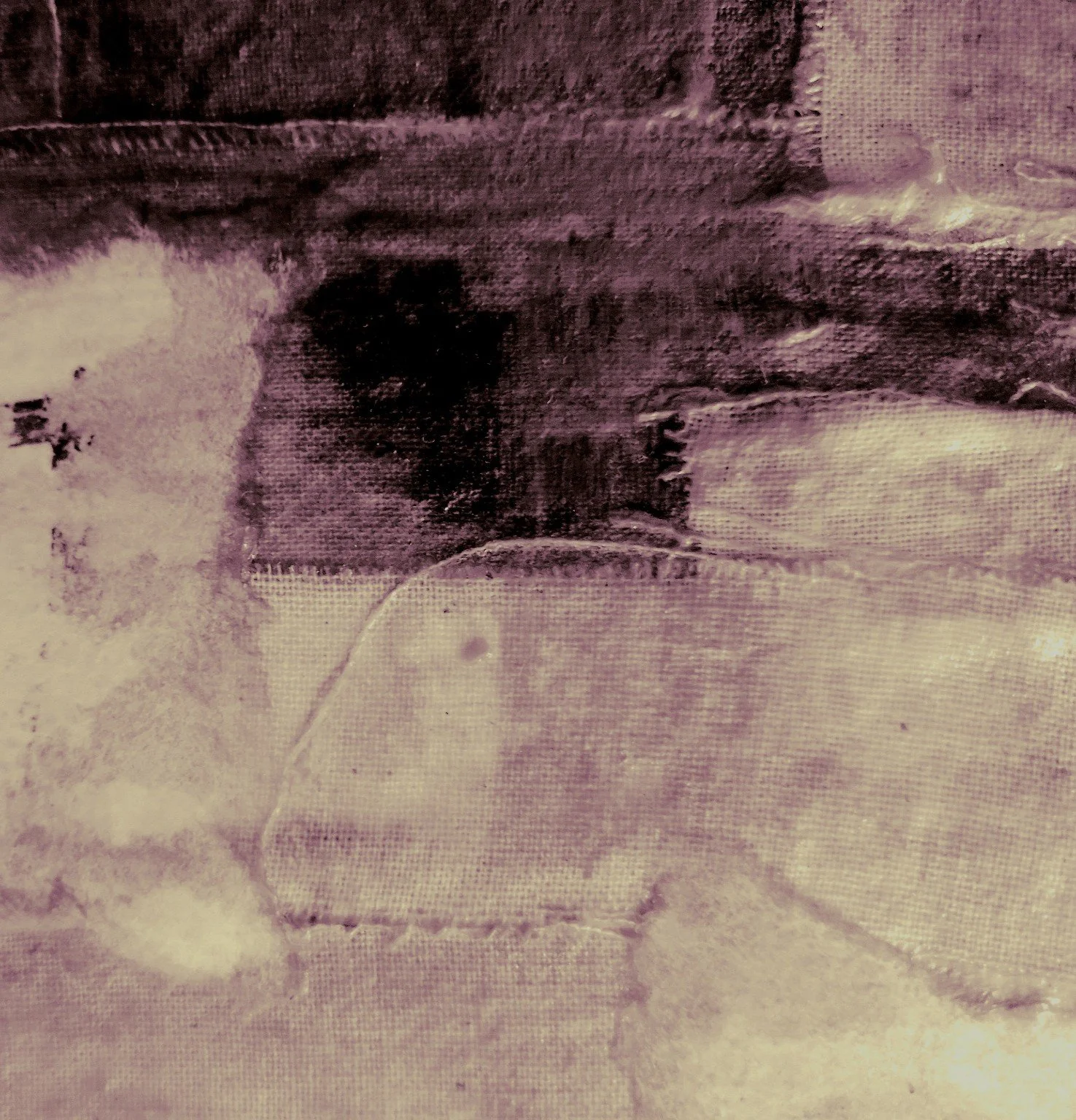
Joined Ground is a new series that explores the space where surfaces meet — where materials press against one another, overlap, and hold.
The works are built from layered blocks, worn textures, and stitched edges that feel both constructed and eroded. Nothing is fully blended; instead, each section retains its own character. The joins are visible. The seams matter. They carry the weight of time, pressure, and decision.
Under Tension
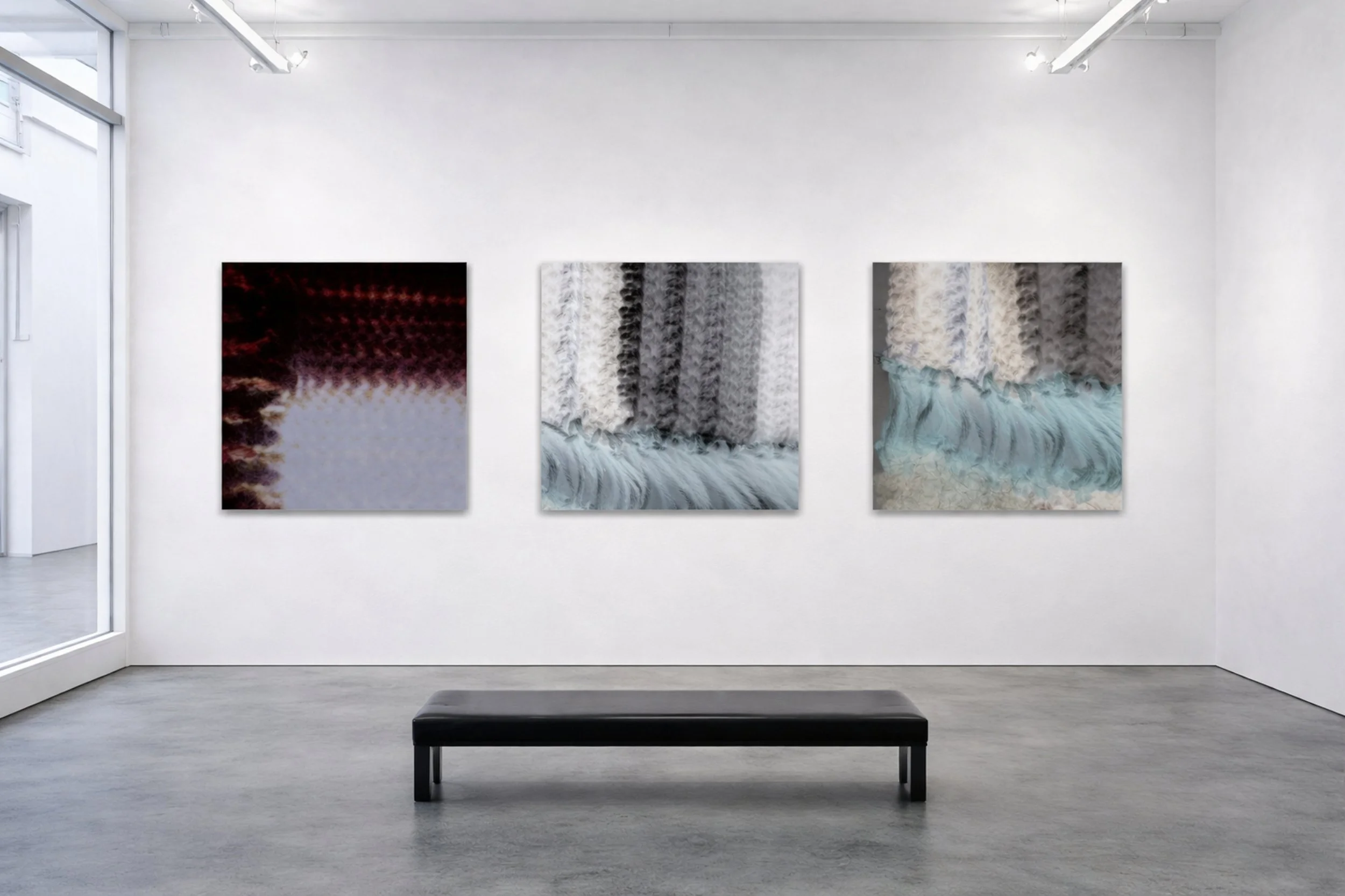
Under Tension is a series that explores the quiet strain that exists where surfaces meet, press, or are forced to hold together. These works are not about rupture or collapse, but about the moment just before—when materials appear stretched, stitched, compressed, or held in an uneasy balance.
Held Figures
Held Figures is a series that explores what it means to be contained — emotionally, psychologically, and physically — without being constrained. The figures in these works are simplified, almost archetypal, yet they carry a strong sense of presence. They are not portraits of individuals, but representations of states of being.
Each figure appears held within a structured, layered ground. The backgrounds are built from repeated fragments, creating a sense of enclosure and support rather than confinement. This layering acts as both a backdrop and a quiet architecture, suggesting stability, memory, or accumulated experience. The figures sit calmly within these structures, neither pushing against them nor dissolving into them.
Night Figures
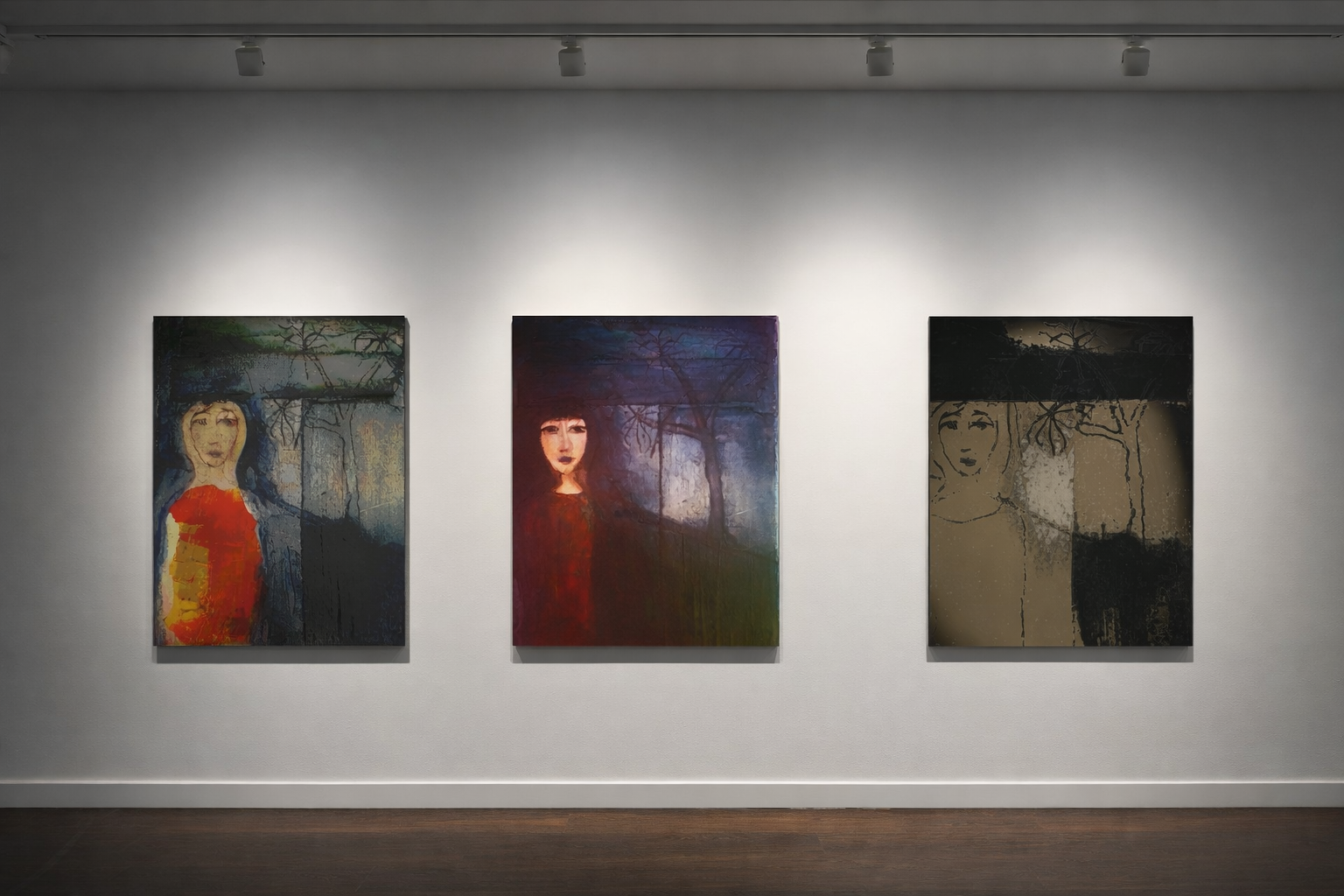
Night Figures is a series of figurative works that emerged slowly, through layering, erasure, and return. Each painting sits in a nocturnal space — a landscape of shadow, muted colour, and suspended emotion — where the figure is present but never fully resolved.
The women in these works are not portraits in the traditional sense. They are not specific individuals, nor do they offer narrative clues. Instead, they act as vessels for interior states: solitude, endurance, quiet tension, and the stillness that comes after dusk. Their faces are pared back, sometimes fragile, sometimes confrontational, as if caught between appearing and withdrawing.
Across the series, recurring elements surface instinctively — branching forms, dark horizons, fractured grounds. These motifs suggest thought patterns, memory, or emotional undercurrents rather than literal landscapes. The figures are held within these spaces, neither fully embedded nor entirely separate, creating a subtle tension between containment and release.
Colour plays a restrained but deliberate role. Deep blues, greys, and violets establish a nocturnal atmosphere, while occasional reds act as quiet signals — warmth, vulnerability, or persistence — within the surrounding darkness. Nothing is decorative; every mark is there to support mood and balance.
Night Figures is less about storytelling and more about recognition. These works invite the viewer to pause, to sit with ambiguity, and to find resonance rather than answers. They occupy the space between presence and absence — a place where emotional states linger without needing to be named.
This series reflects my ongoing interest in the psychological dimensions of figurative work, where the figure becomes a site of reflection rather than depiction. Night Figures is not about the night itself, but about what surfaces when things become quiet enough to be seen.