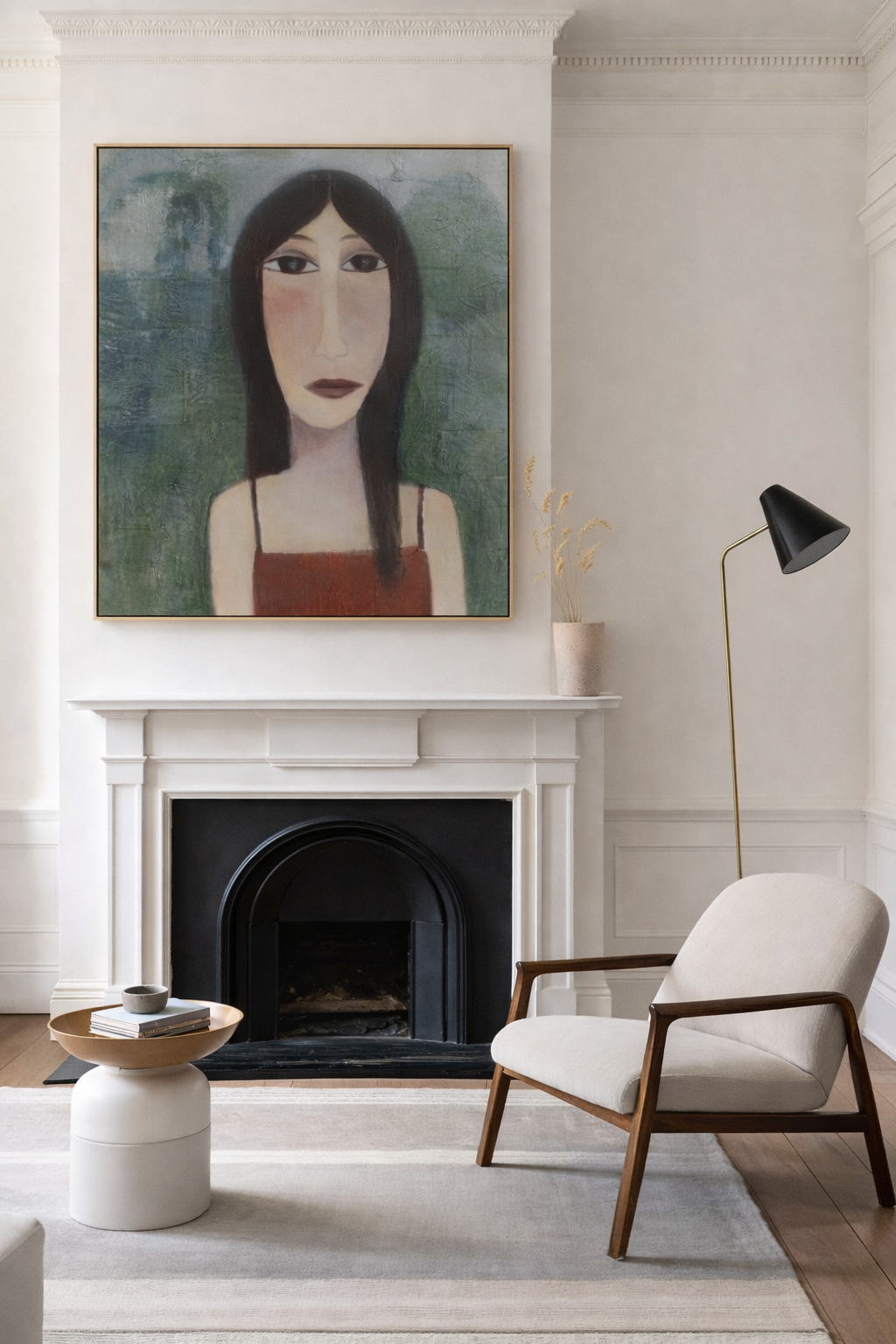
The Return of Texture: Why Handmade Art Is Resonating Again
There’s something happening quietly in the art world—and you can feel it before you can quite explain it.
People are leaning in closer.
Not to analyse composition or theory, but to see the surface. To notice the unevenness. The marks. The layers. The evidence of a human hand.
Texture is having a moment.
When a Painting Grows on You
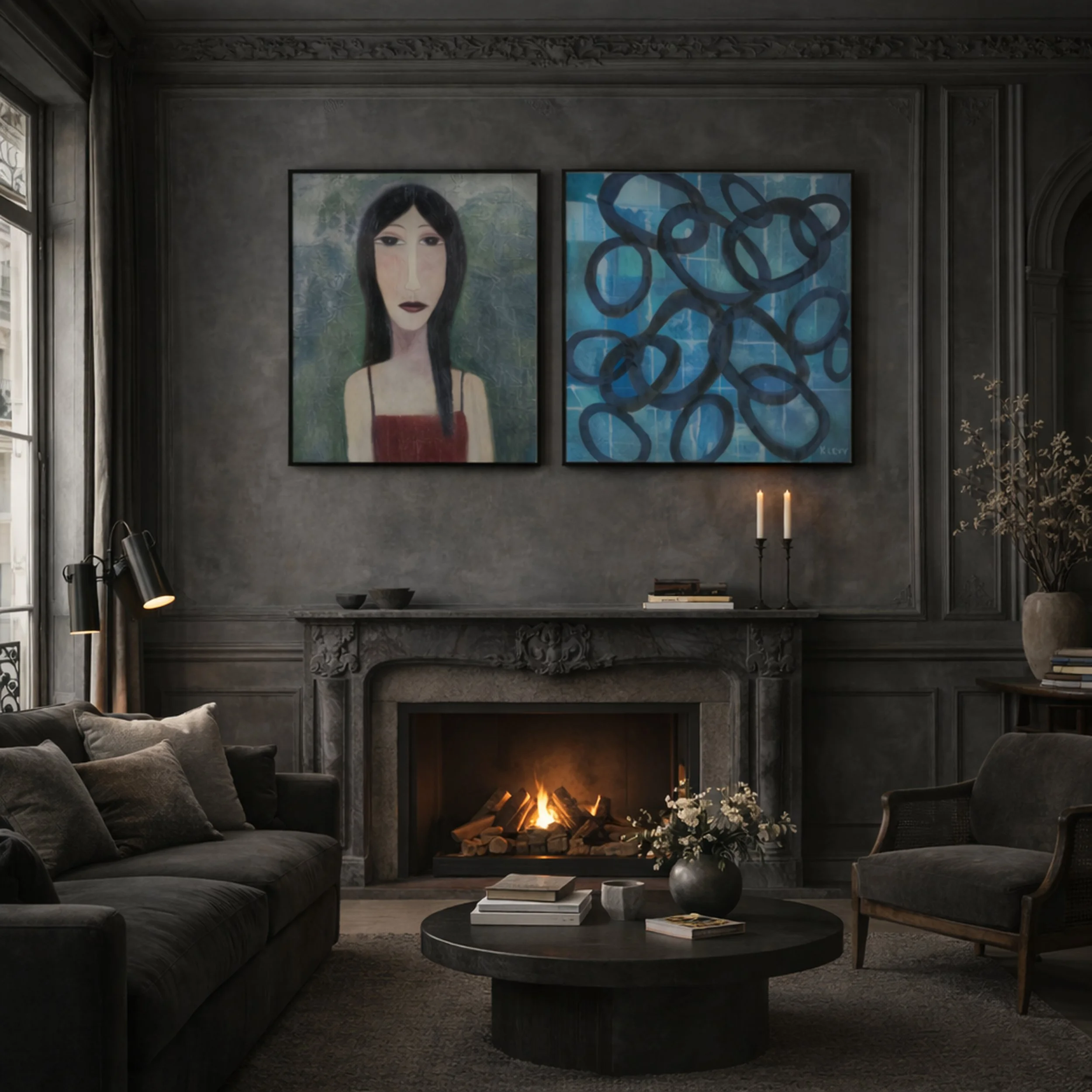
There’s a painting I made a few months ago.
At the time, I liked it—but I wasn’t completely sure about it. It didn’t have the immediate clarity or confidence of some of my other works. It felt a little unresolved. A little quiet.
But something interesting has happened.
The more I see it, the more I like it.
What happens when a painting doesn’t demand attention—yet you can’t look away?
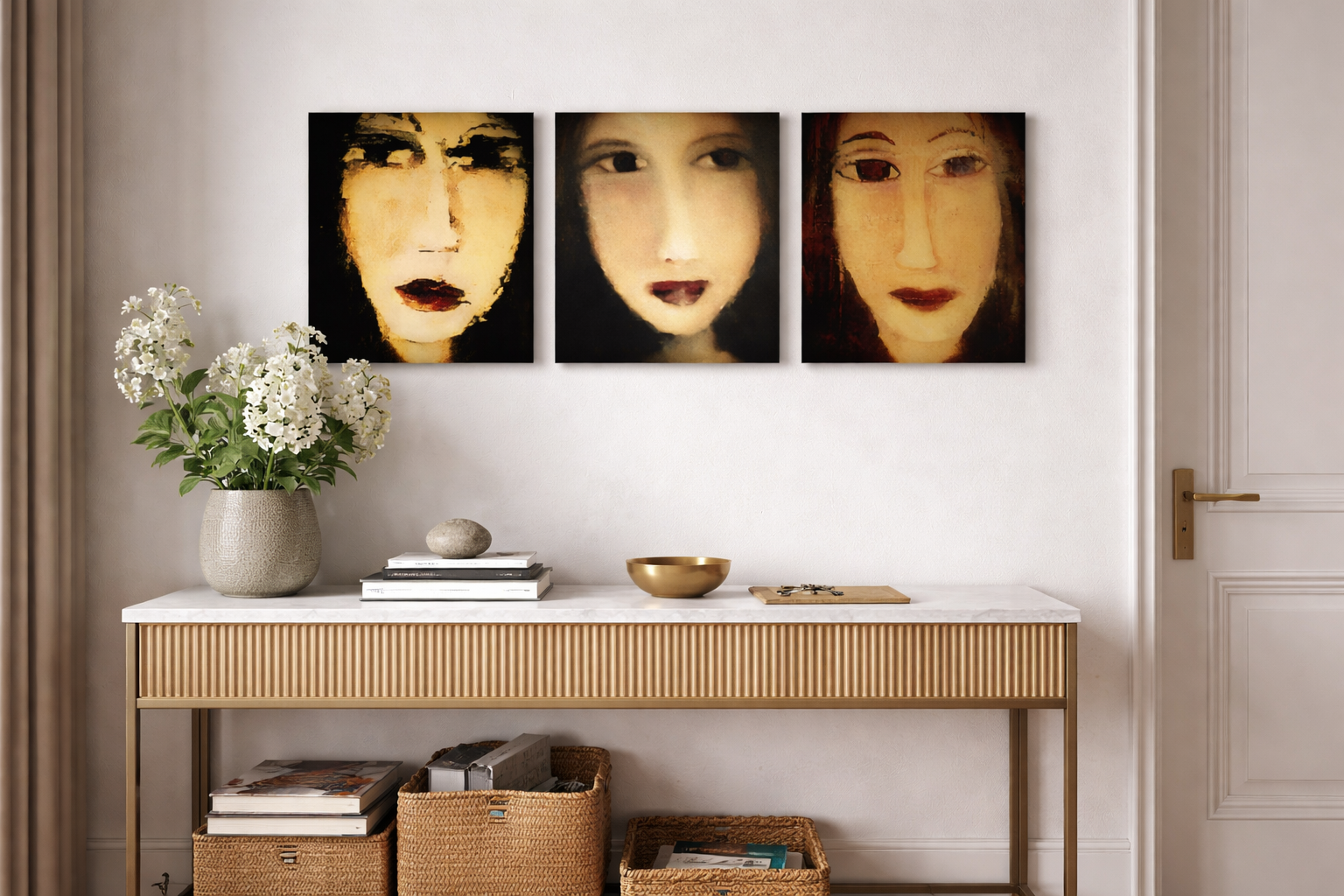
In a world of visual noise, there is something quietly powerful about restraint. Light (Triptych) was created from that idea—three works that do not compete for attention, but instead hold it gently.
Each face emerges through layers of texture and softened detail, suggesting memory rather than likeness. These are not portraits in the traditional sense. They are impressions—felt rather than defined.
There is a deliberate ambiguity. Features dissolve at the edges. Expressions remain unresolved. The viewer is invited not to interpret too quickly, but to sit with the work, allowing meaning to unfold slowly.
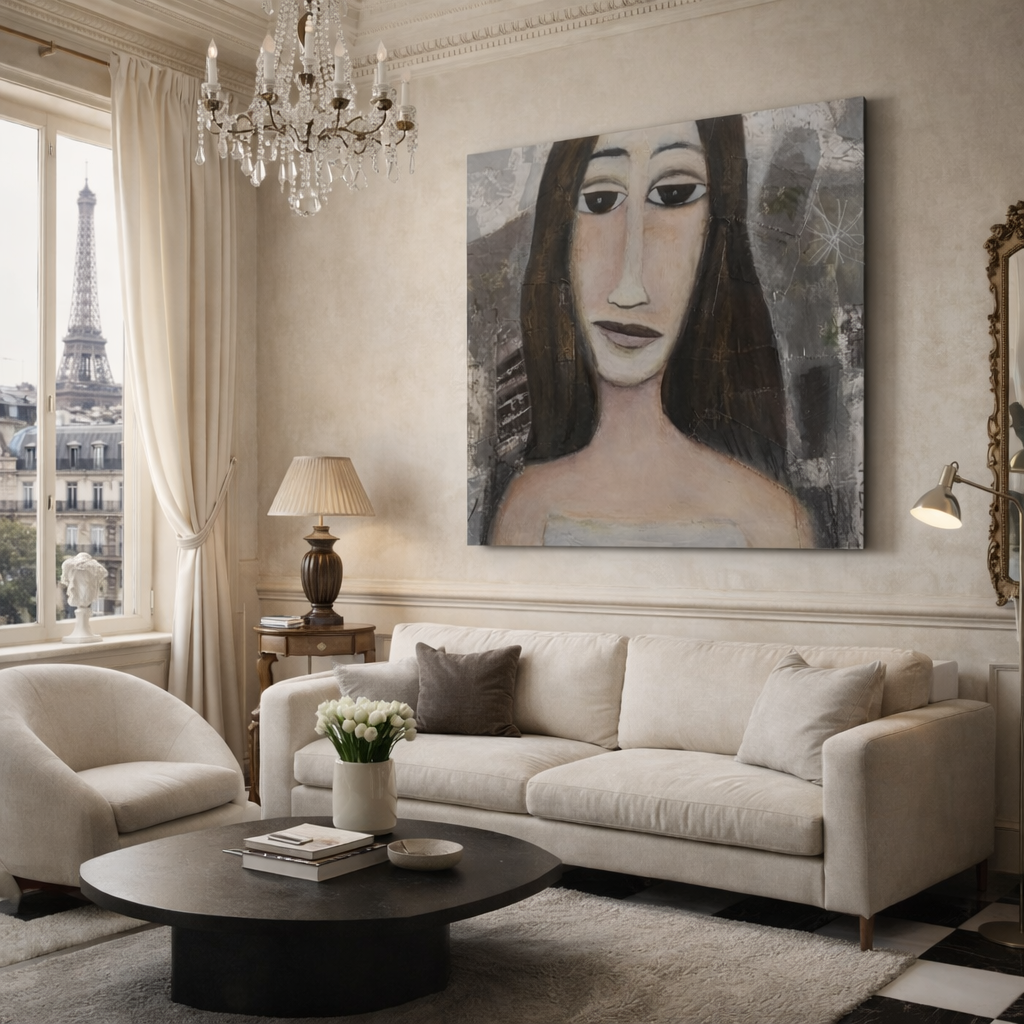
When a Portrait Becomes a Presence
On painting archetypal figures and the quiet psychology of the gaze
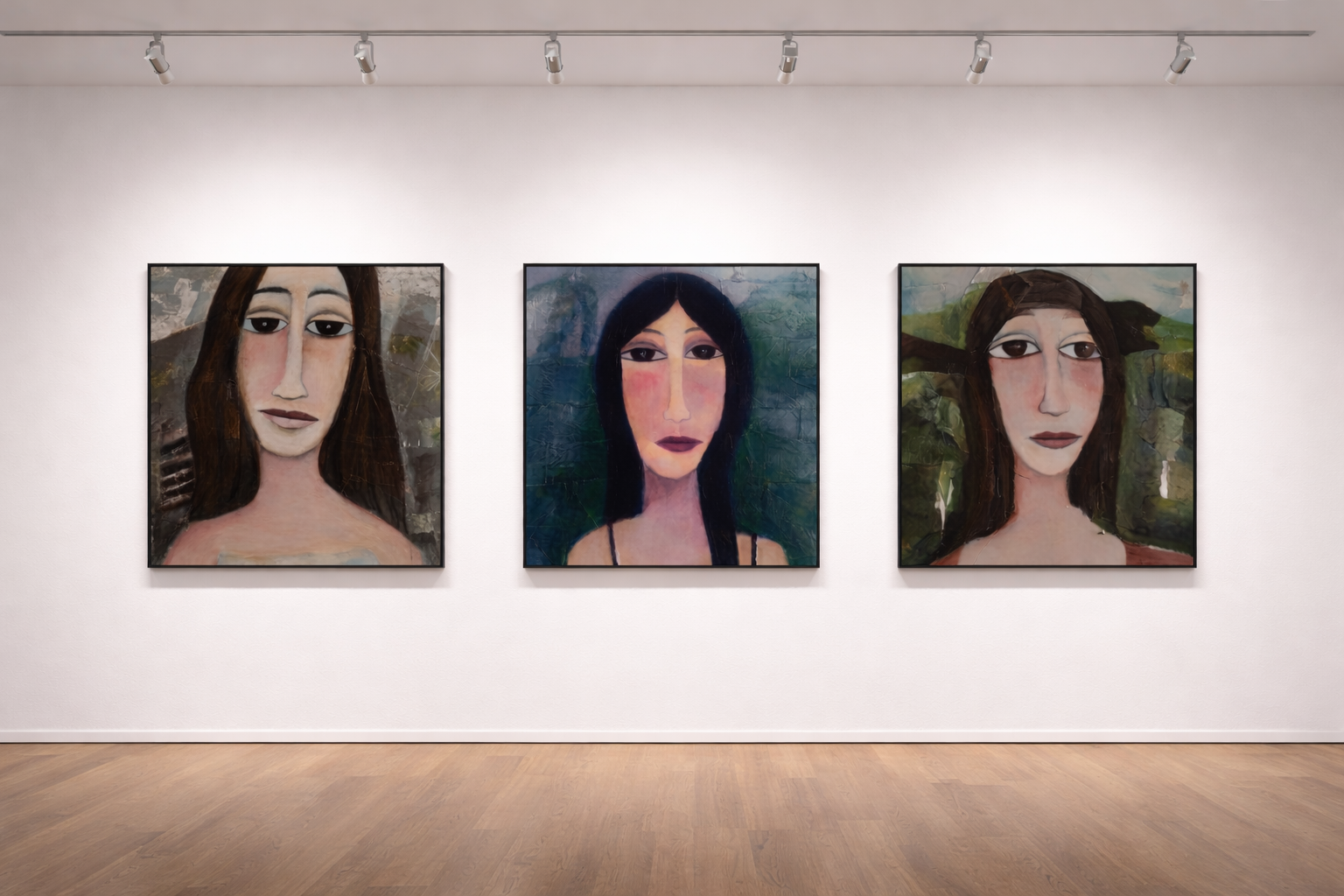
Recently someone commented on one of my paintings, noting that the figure seemed to carry a strong psychological presence. It was an interesting observation, because that effect is not something I consciously plan when I begin a painting. It seems to emerge gradually during the process itself.
Most of my portraits begin very simply. I usually start with a rough charcoal drawing as a guide, sketching the basic proportions of a face and shoulders. The structure is intentionally minimal — a long face, a calm gaze, and a quiet posture. From there the painting evolves through layers of texture, collage fragments, and thin glazes of colour.
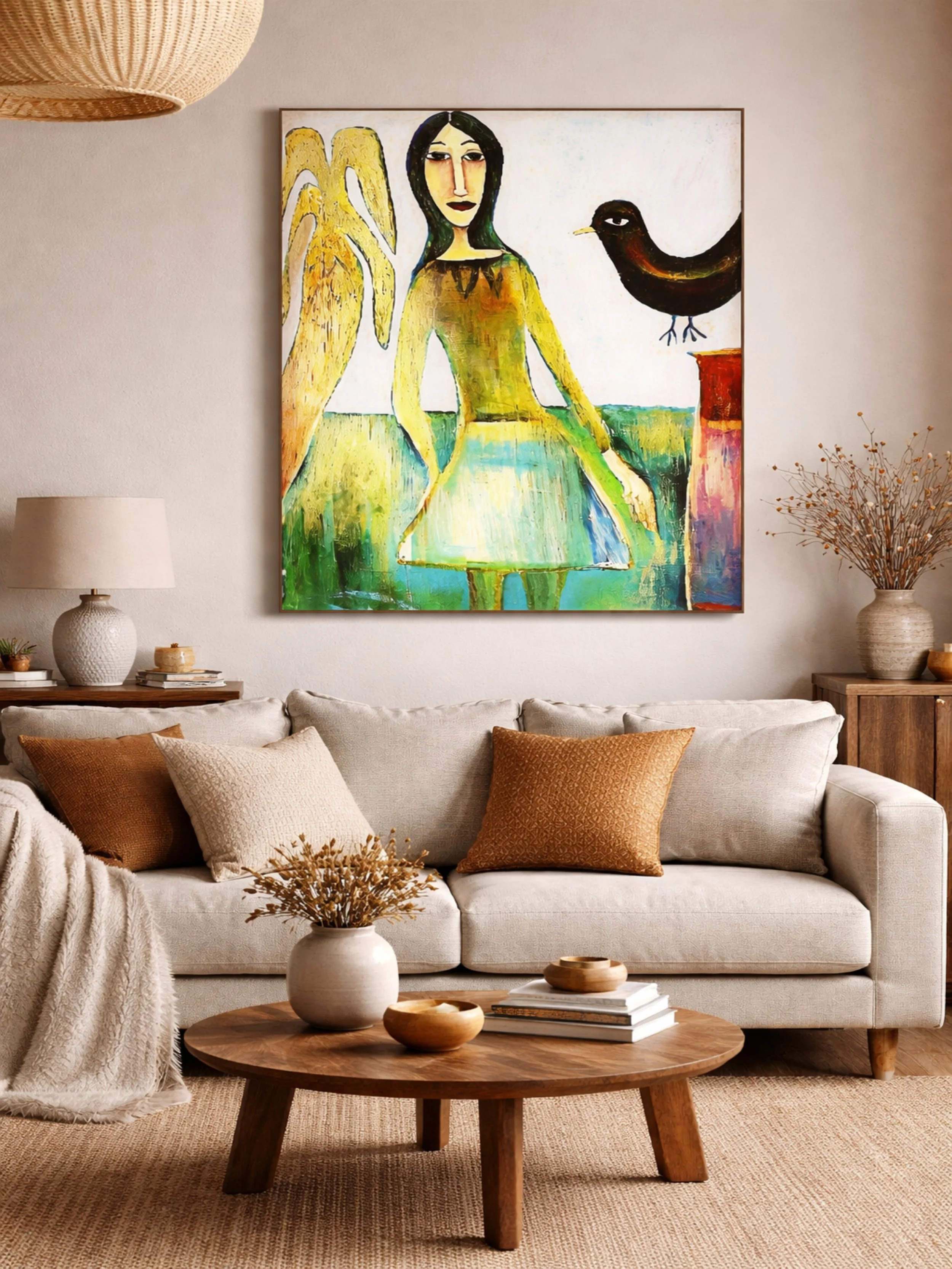
Resurrecting Earlier Work in the Digital Age
Resurrecting Earlier Work in the Digital Age
Recently, I found myself looking at a painting I made nearly two decades ago.
It had been sitting quietly in my archive — not rejected, not celebrated. Just dormant.
In revisiting it digitally, I wasn’t trying to correct it. I was trying to understand it.
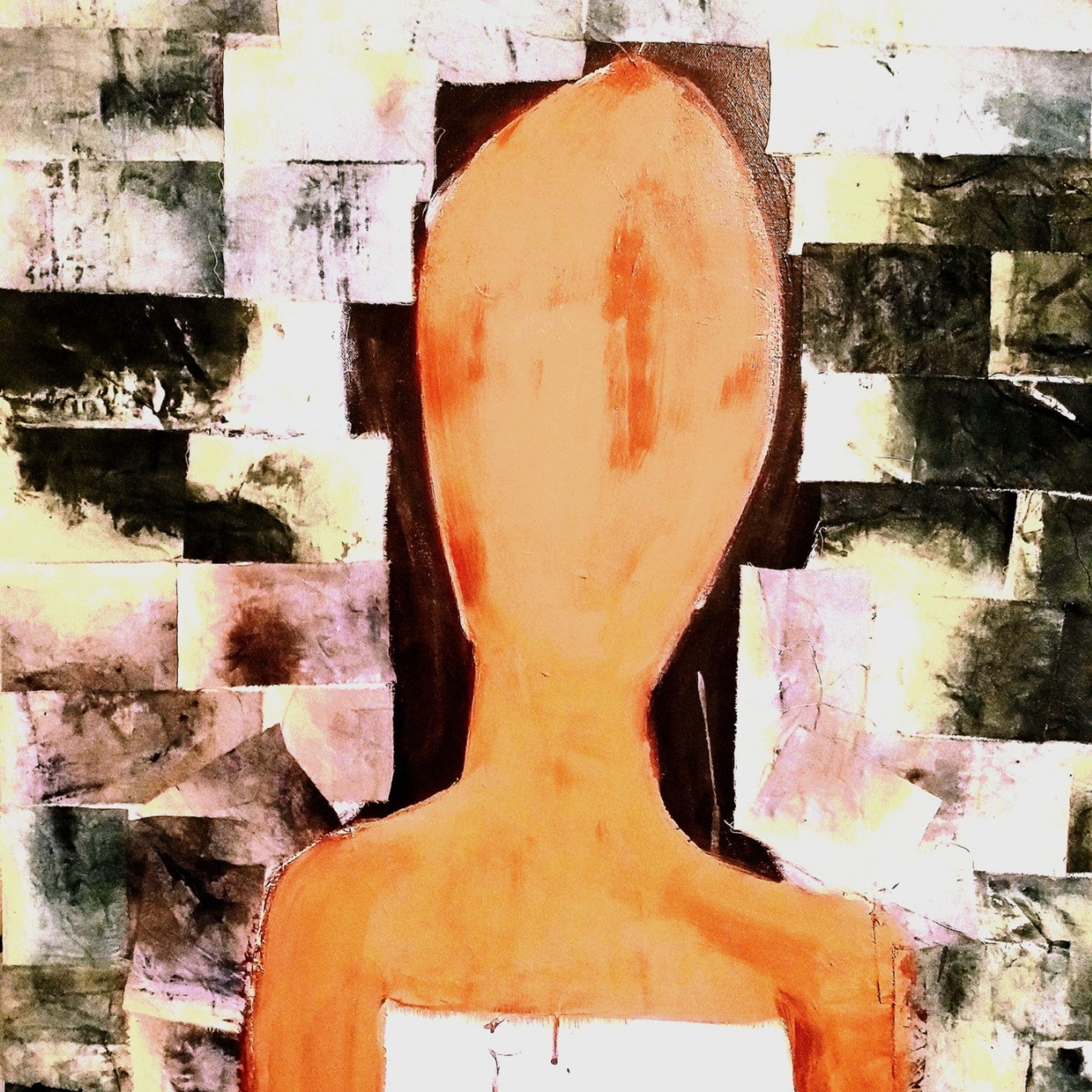
Images Before Words
“Painting is the pattern of one’s own nervous system being projected on canvas.”
— Francis Bacon
Before we explain, we respond.
Before we find the right words, something registers — emotionally, physically, instinctively.
As an artist, I’ve long been aware that images seem to reach a place language doesn’t always access first. Bacon’s remark captures this beautifully: painting bypasses explanation and connects directly with the nervous system. It meets us before interpretation, before justification, before we decide what is acceptable to say.
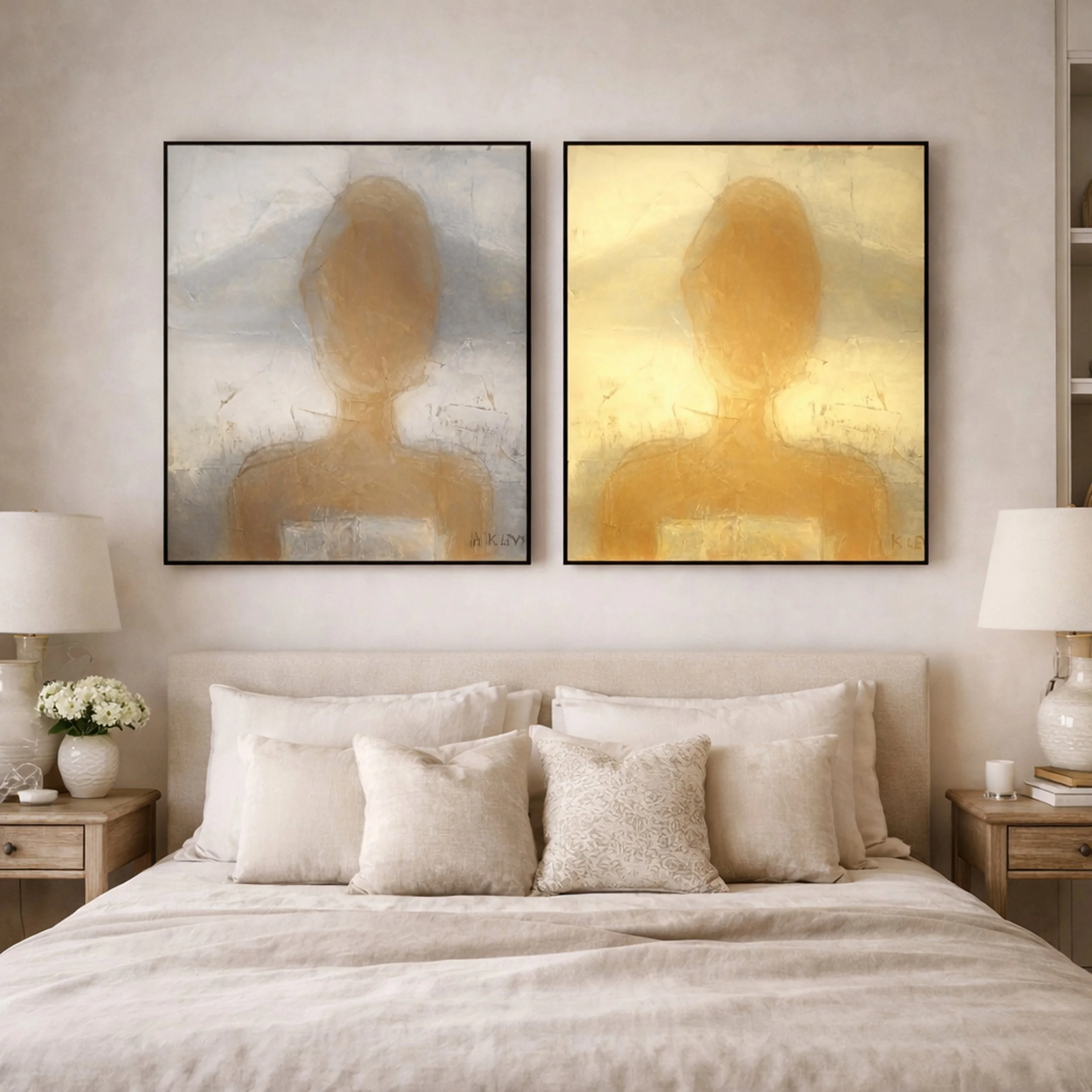
When Two Paintings Find Each Other
I didn’t plan these works as a diptych.
Guardian of the Land (Pale) and Guardian of the Land (Luminous) were created at different moments, in slightly different emotional registers. One quieter, cooler, reflective. The other warmer, glowing, reassuring.
But when I placed them side by side, something shifted.