The Energy, Warmth and Versatility of Loops
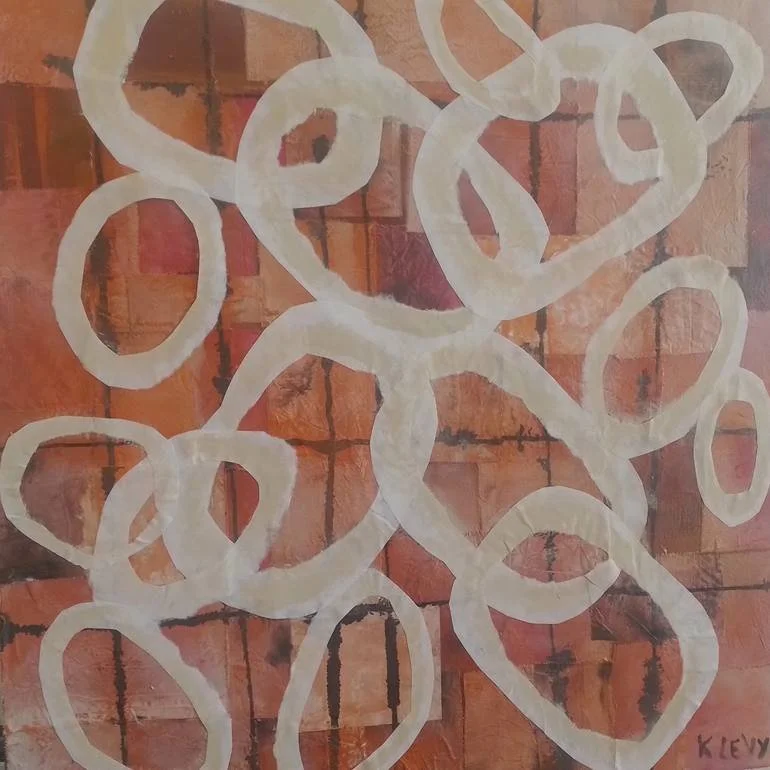

Loops have appeared repeatedly in my artwork. I’m drawn to their freedom—the way they can circle, overlap, stretch and move across a painting without becoming rigid or predictable. Unlike straight lines or formal geometric shapes, loops feel spontaneous and organic. They create movement, but their rounded forms also have an innate softness.
In this painting, broad cream loops travel across a layered background of terracotta, rust, muted rose and earthy brown. Beneath them, traces of a loose grid provide just enough structure to hold the composition together. I like the contrast between these two visual languages: the grid is ordered and architectural, while the loops are intuitive, energetic and free.
The warm palette gives the painting an immediate sense of comfort. Terracotta has an earthy, grounding quality, yet it can also feel rich and sophisticated. The cream loops lighten the composition and prevent the deeper colours from becoming heavy. Together, they create a painting that has presence and energy without feeling harsh.
What surprised me when visualising the painting in different interiors was just how versatile it could be.
In a warm contemporary room filled with natural wood, stone, linen and soft neutral colours, the painting feels calm and organic. Its earthy tones belong naturally in the space, while the loops introduce a gentle rhythm and movement. Here, it has an almost meditative quality.
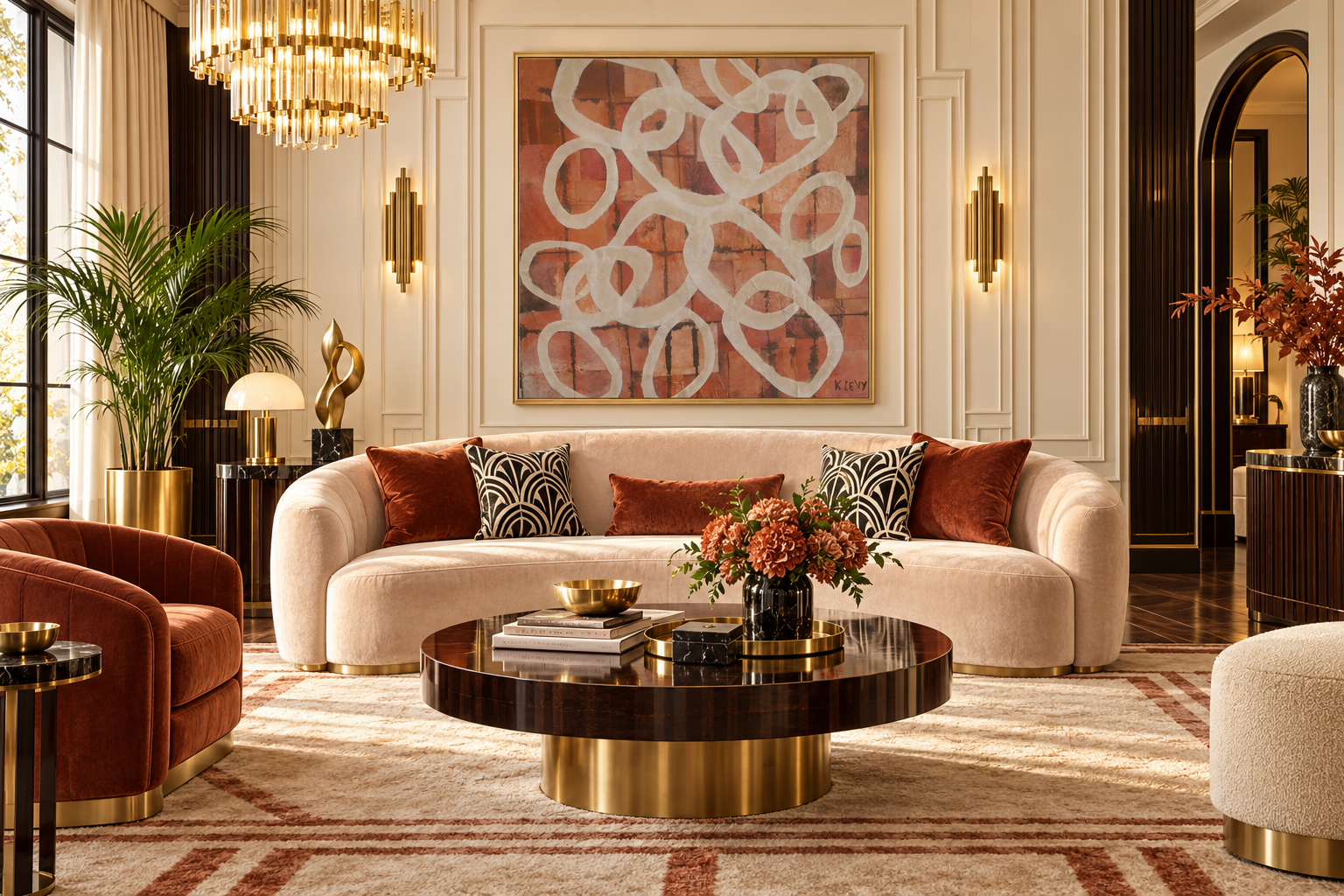
Placed in a glamorous Art Deco living room, however, the same painting takes on a different character. The curves of the artwork begin to converse with the rounded sofa and sculptural furniture. Its terracotta tones are echoed in velvet cushions and chairs, while brass, dark wood and chandeliers bring out its richness. In this setting, the painting feels bolder, more luxurious and more theatrical.
Nothing about the artwork itself has changed, yet the surrounding environment allows us to notice different qualities within it. One interior draws out its warmth and tranquillity; the other reveals its energy and glamour.
That is one of the things I find most fascinating about placing art in interiors. A painting does not simply coordinate with a room. It can change the room’s atmosphere—and the room, in turn, can change the way we experience the painting.
